
Little MapsDesigning a souvenir that belongs to one street.
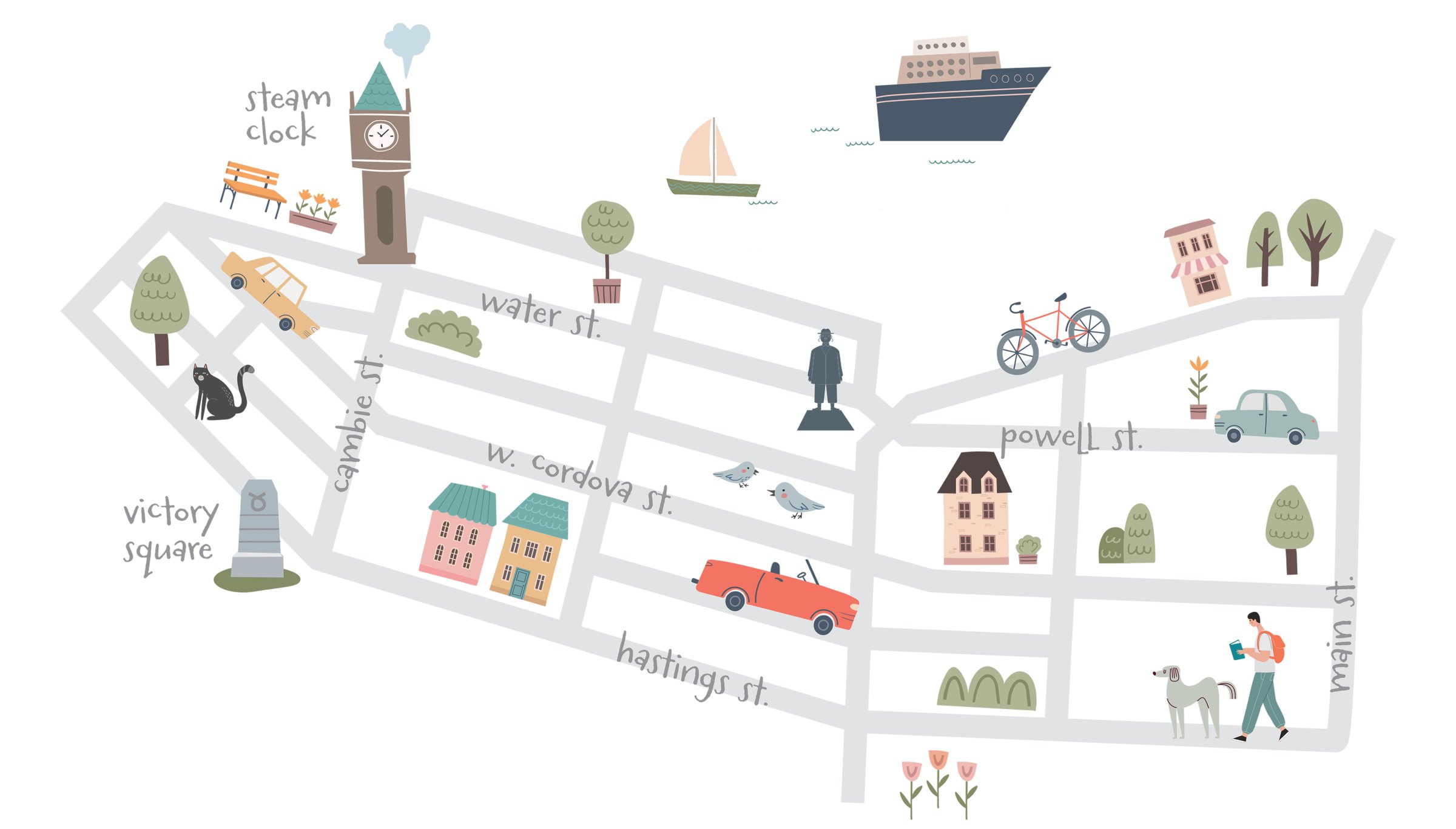
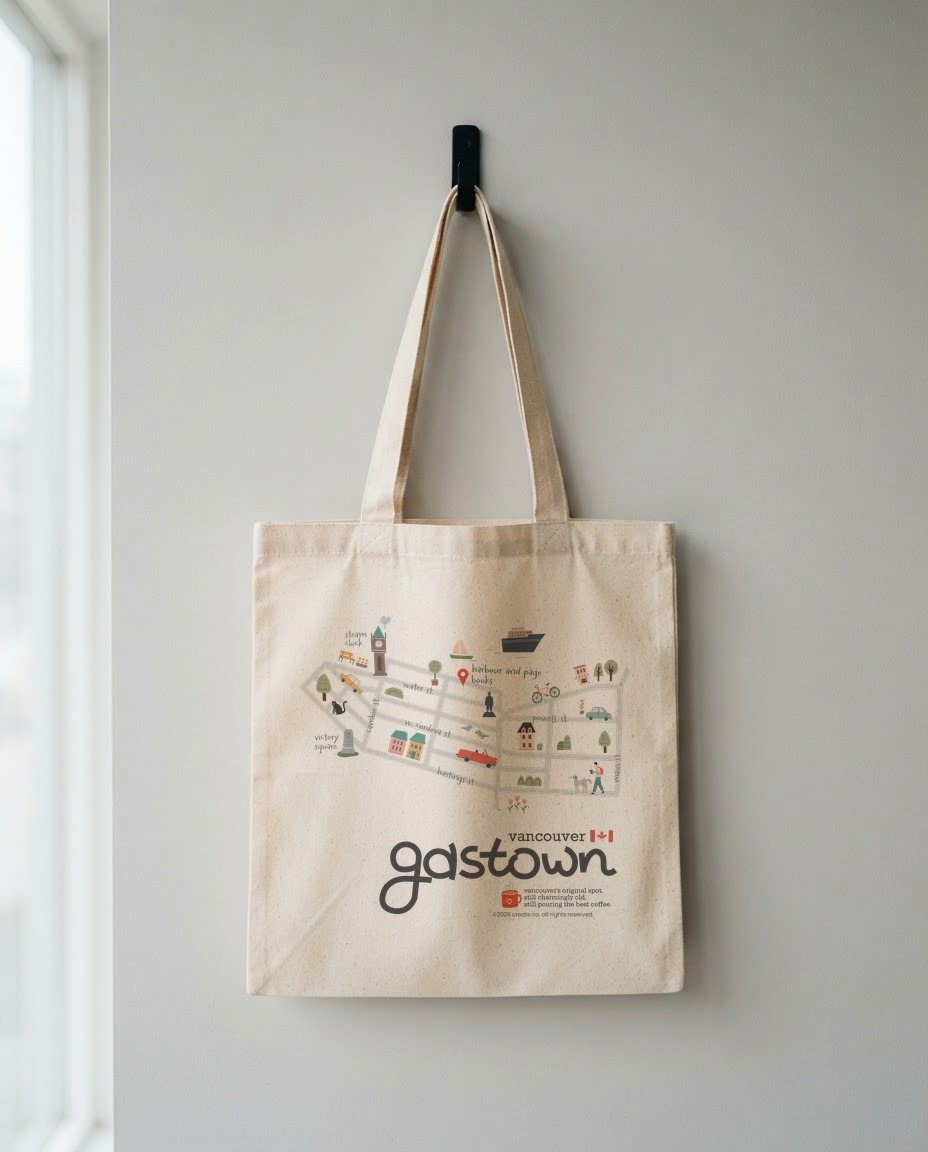
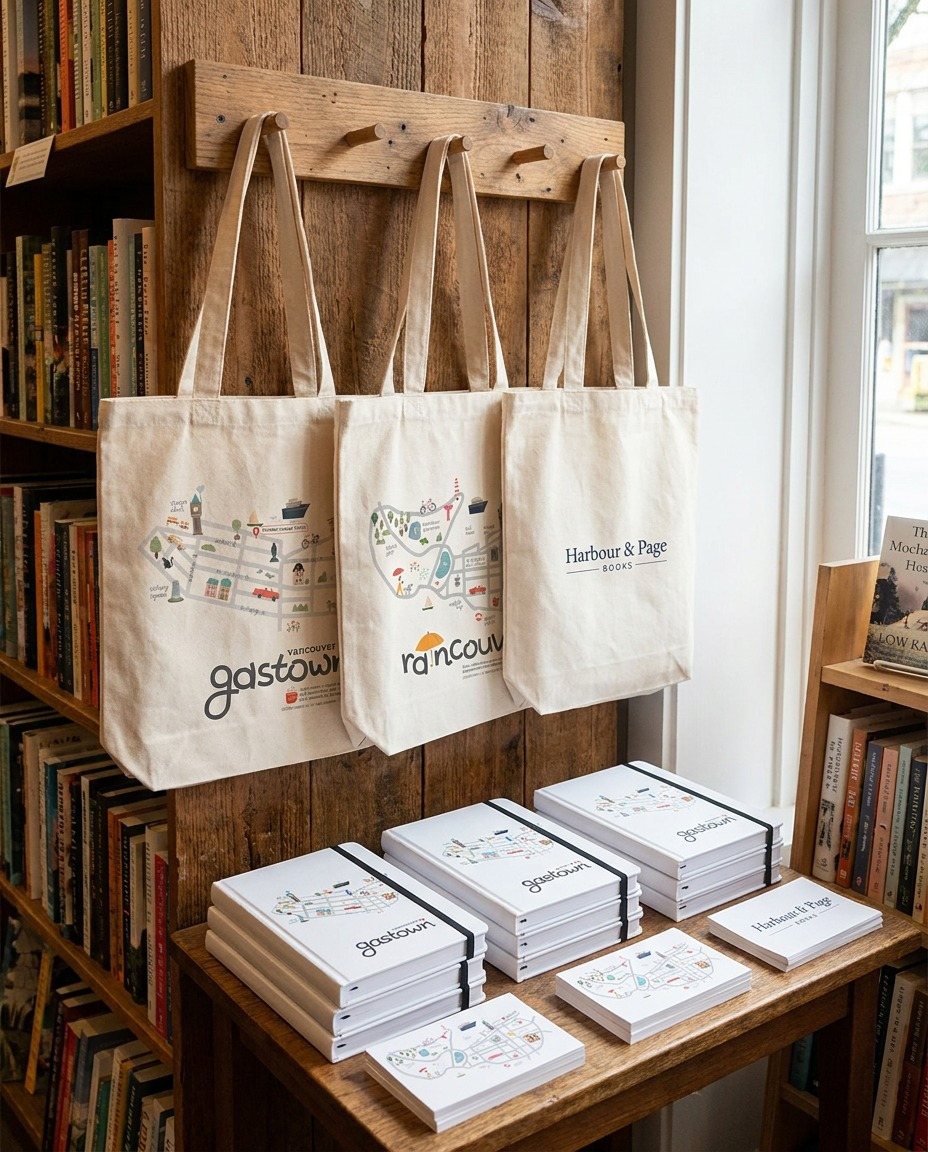
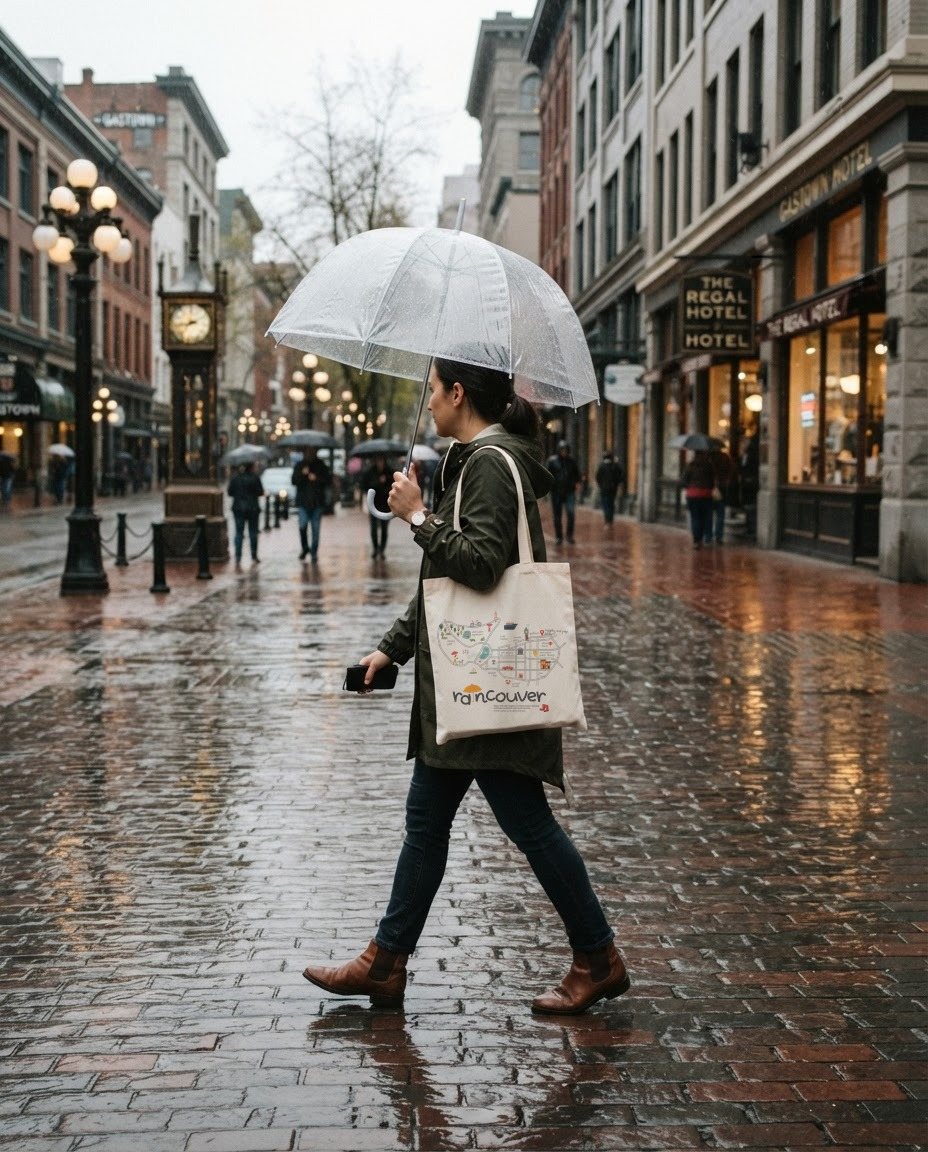
Little Maps is a souvenir meant to feel local. Instead of one city map for everyone, each shop gets an illustrated map of its own neighbourhood, with the shop pinned on the front and its logo on the back. Printed on totes, postcards and planners, the map gives tourists a keepsake of the place they discovered and gives the shop a quiet way to be remembered. The series starts in Vancouver. Gastown, Raincouver and Vancouver are the first three maps.
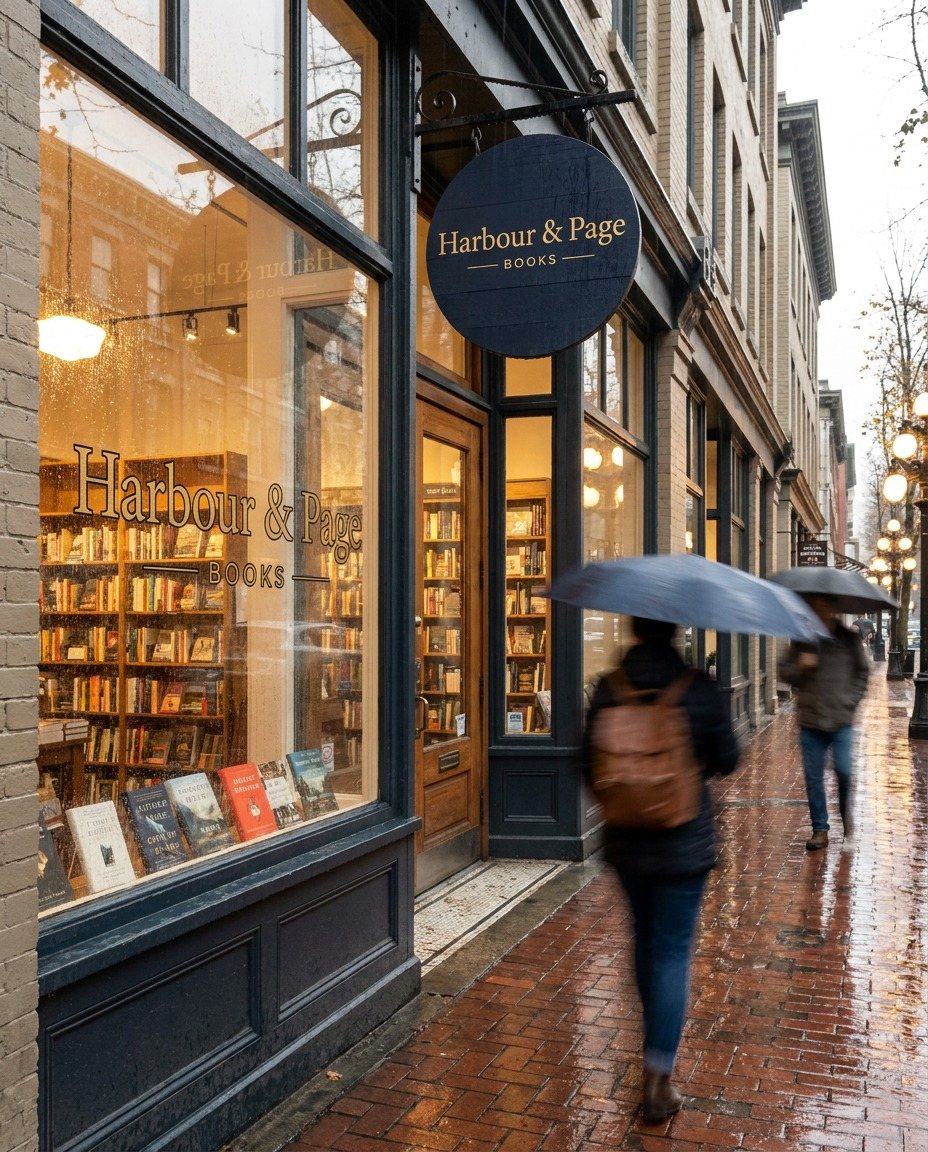
The shop's own logo goes on the window and the sign; the map does the rest of the talking.
- One map, one neighbourhood
- Souvenirs that look the same everywhere are valued less and bought less often, so each map is drawn for one neighbourhood and nowhere else.Source: Wu et al., Sustainability, 2022
Design notes
Each map leads with the neighbourhood, not the shop. The streets and landmarks are illustrated in a light, friendly line so the map reads as a keepsake first, and the neighbourhood name is set large in a hand-lettered style that people recognise at a glance.
The shop appears only as a single pin on the front and a small logo on the back. That restraint is intentional: a souvenir that feels like an advertisement does not get carried. One that feels like the place does, and it carries the shop with it.
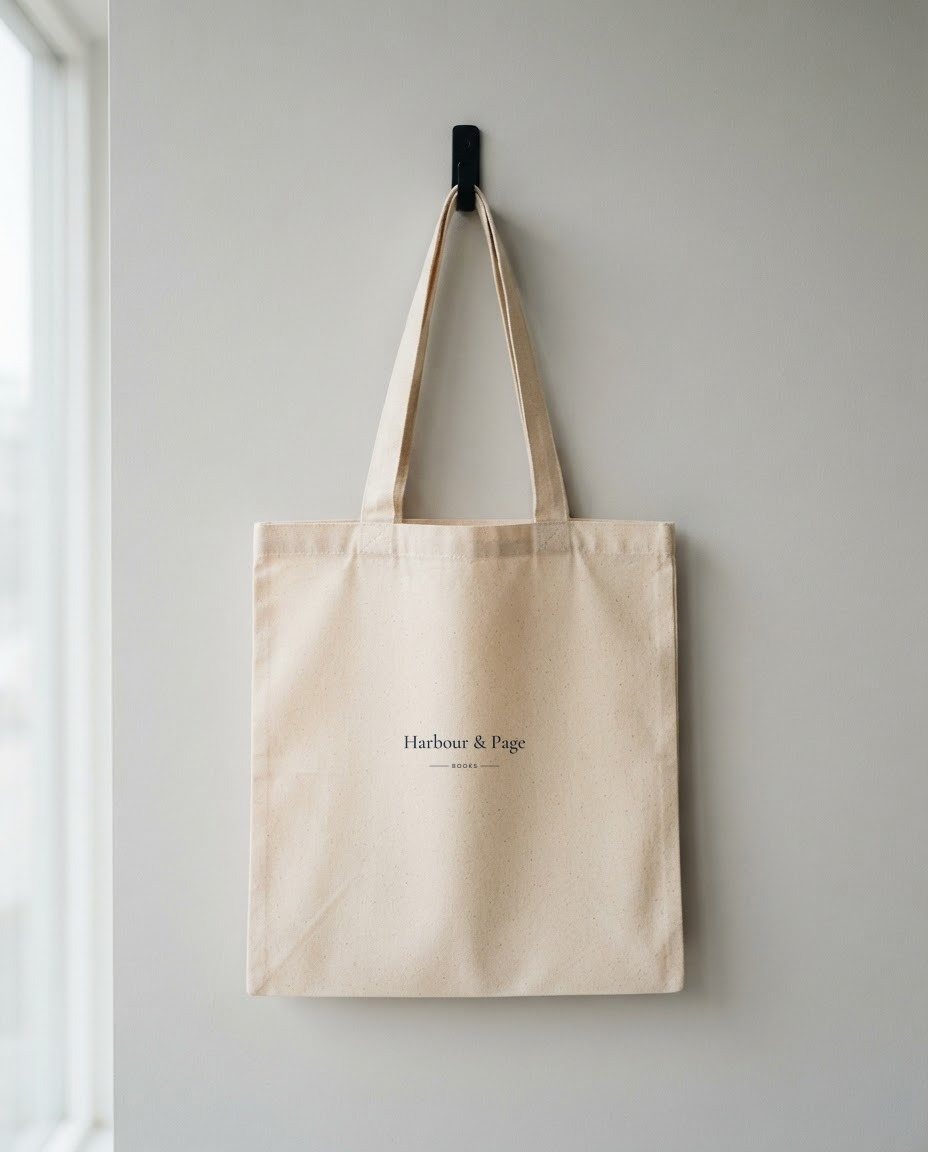

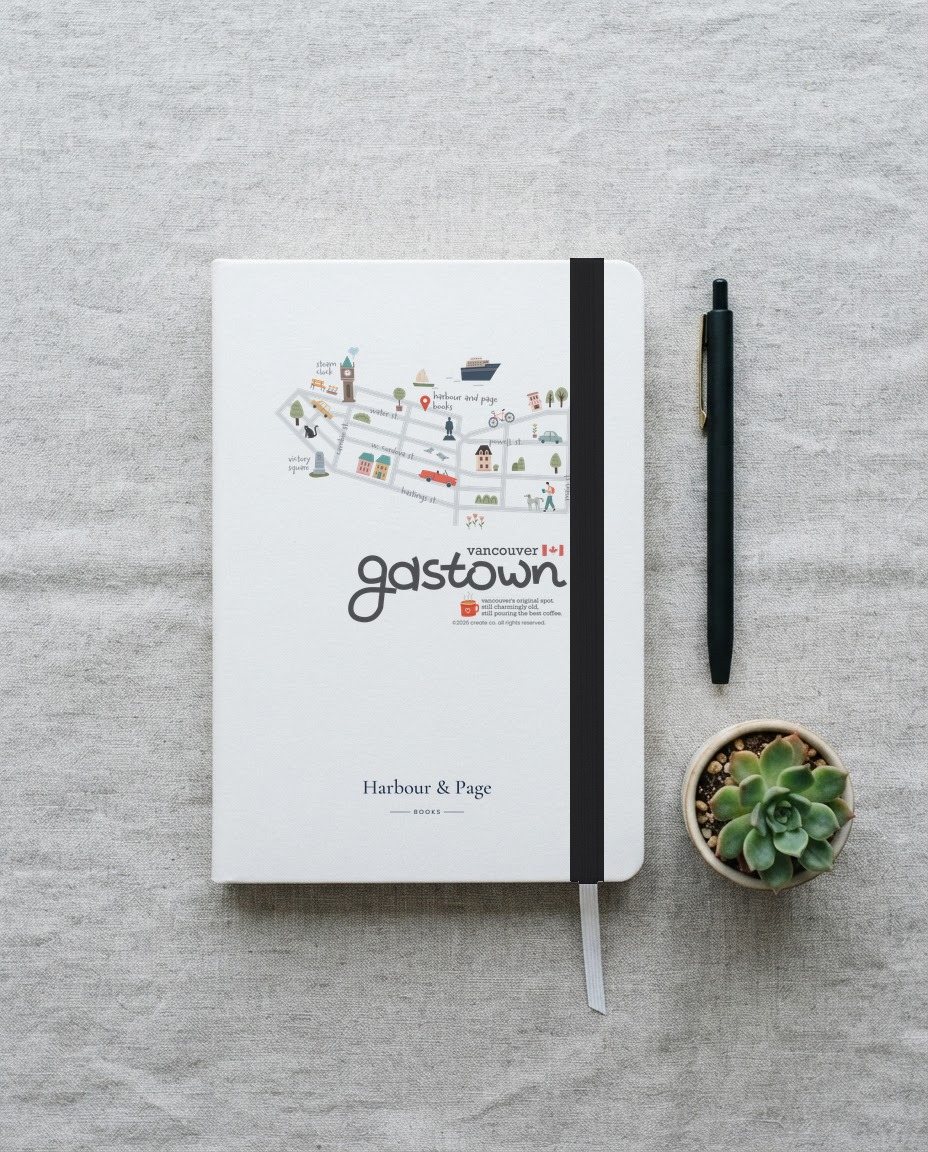
The shop's logo on the back, kept small. Postcards and a planner from the same map.
- A bag people keep
- Most people keep a branded bag because it is useful, and one tote is seen thousands of times over its life, so the map leads and the shop's logo stays small on the back.Source: ASI Global Ad Impressions Study, 2026
- Bought on the spot
- Shopping for a souvenir on the trip itself builds memories that tie visitors to the place, so the same map also comes as postcards and a planner at smaller prices.Source: Sthapit, Coudounaris & Björk, Leisure Studies, 2018
Harbour & Page Books is a sample shop created to show the program.